Friday, 27 May 2011

Irina Werning again!


This photo here is of a cook at a remote school in the Andes. I really love the angle she's used and how worn it all looks. You may remember Irina Werning, she did this project. I'm very keen on her photography; check it out!

http://irinawerning.com/

Reynold Reynolds - Secret Life

This is pretty awesome, great animation and really interesting.

Secret Life from ⓇⓇ Artstudio Reynolds on Vimeo.


It reminds me slightly of Jan Svankmajer - especially Flora and Food, lots of the same kind of themes. It seems to me as if the film is about synthesis between the human world and the plant world, but to what end I'm not entirely sure! Discussion welcome.

Friday, 20 May 2011

The liner notes for Michigan - possibly the greatest prose I've ever seen. Honestly, just read it.

"Oh Detroit, what have you done to man, his wife and kids, his cousins, his music, his hairstyles, his shoes with white tips, his pleated pants, his elbow slung out the car window, his basketball courts, his officers downtown, his nightclubs, his shirtsleeve tucked over a pack of cigarettes, his imagination, his industry, his sense of humor, his home? Oh Detroit, what have you done to city hall, the public trains, the workers’ union, the Eastern Market, Boblo Island, the Ambassador Bridge? Where have you put your riches, where have you hid your treasure? Your concrete overpasses, your avenues as wide as rivers, your suburbs bloated with brick homes and strip malls and discount liquor stores and resale shops. When you are dead and gone, who will care for your children’s children? They have run wild with the bastard boys around the streets, reckless car rides downtown, rigorous dancing, drug taking, knife-stabbing, pillow-stuffing, tail-wagging restlessness. They have been drunk with this for years. They have been out of their minds. They have been left with nothing.

Even still, here and now, there is a renaissance of hope. The streets will take up horns and play free jazz, the buses will clang their bells in time, the buildings once burned out will be home to the homeless. Living rooms will be filled with furniture. Broken families will reconcile. Women will be honored with lilac wreaths. Men will begin to lower their voices. Children will fill playgrounds and parks with the sounds of their playing.

Who can call us father, or who can call us son? If we have regarded ourselves abandoned by whatever thing (a person, a lover, a parent, a false prophet, ourselves) then we have lost touch with the great family, ourselves, all of us together, in this great place called Michigan. Who is your neighbor? He is your brother. Who is that stranger? She is your mother. The man downstairs hammering on the wall, the woman blow-drying her hair in the bathroom – these people are your family. Have you lost your mother to death? Have you lost your father to disease, to war, alcohol, drugs, a car accident? Nothing can replace them. They have been made known completely in death, to whatever supernatural landscape (who can say for sure?). Until then, it is our hard task to welcome the widows, the children, the orphans, the fatherless into our family. What little effort it takes – a friendly nod at the stranger on the street, giving change to the man who asks, saying hello or goodbye, opening doors, keeping our mouths shut. In the small things, the day-to-day gestures, the normal business of the day, we do the great work of the kingdom, which is to welcome each unlikely individual into the fold, one person at a time.

We do these things, not because we are Michiganders, but because we have been called to participate in the world’s creation from the very beginning. Making music. Baking cakes. Sewing curtains. These things mean something greater: that we have been known from the very start. Our eye color, our hairline, our jawline, the shape of our big toe, the tone of our voice. These things have been designed from the very beginning. What kind of music we listen to. The sort of skirt that looks good. The baseball cap, the tennis shoe, the orange bandana. We have been made to find these things for ourselves and take them in as ours, like adopted children: habits, hobbies, idiosyncrasies, gestures, moods, tastes, tendencies, worries. They have been put in us for good measure.

Perhaps we don’t like what we see: our hips, our loss of hair, our shoe size, our dimples, our knuckles too big, our eating habits, our disposition. We have disclosed these things in secret, likes and dislikes, behind doors with locks, our lonely rooms, our messy desks, our empty hearts, our sudden bursts of energy, our sudden bouts of depression. Don’t worry. Put away your mirrors and your beauty magazines and your books on tape. There is someone right here who knows you more than you do, who is making room on the couch, who is fixing a meal, who is putting on your favorite record, who is listening intently to what you have to say, who is standing there with you, face to face, hand to hand, eye to eye, mouth to mouth. There is no space left uncovered. This is where you belong.”


PS. I actually copied this from the vinyl; thats dedication for you. sorry for any spelling errors.

Thursday, 19 May 2011

Ducklike creatures - some of my own photography.

These photos were taken over a year and a half ago, which is pretty revealing as to how long it takes me to put things up. Hope somebody might enjoy these.


Moorhen sultry walk

Canada Goose Grooming

Splashing Coot

Canada Goose 2

Mandarin Duck

More here

Thursday, 7 April 2011

Ovid - translated from Latin Dactylic Hexameter and then reimagined into English Dactylic Hexameter

As a pre-emptive defence for this - Dactylic Hexameter in English is nigh on impossible and unwieldy.

Athens has been threatened - Tereus saves it from barbarians and marries the king's daughter. But the gods have cursed it.

Thracian Tereus routed, with men procured from elsewhere, those
foreigners, gaining a name so distinguished in the conqering air,
Tereus, born of the line of our Ares, because of forceful,
powerful action, from Pandion, foolish Athenian, received as
wife Procne. Hera, nor even Hymen would act as her bridesmaid,
those blessed Graces stayed away: Furies held snatched torches from
funerary marches; Furies prepared the bed marked out for lovers,
over the roofs of their marriage chambers, a hideous screech owl
perched, oppressing. With this bird omen, Tereus was forged together
with her, Procne, with this bird omen they were made parents of Itys.


Meter wise:

Thracian/ Tereus/ routed,/ with men pro/cured from else/where, those
-^^ -^^ -- -^^ -^^ --
foreigners,/ gaining a /name so dis/tinguish’d /in the conq’/ring air,
-^^ -^^ -^^ -- -^^ --
Tereus/, born of the/ line of our/ Ares/, because of/ forceful,
-^^ -^^ -^^ -- -^^ --
powerful/ action, from/ Pandion/, foolish A/thenian, re/ceiv’d as
- ^^ -^^ -^^ -^^ -^^ --
wife Procne./ Hera, nor /even/ Hymen would /act as her/ bridesmaid,
- ^^ -^^ -- -^^ -^^ --
those blessed /Graces stayed/ away:/ Furies held/ snatched tor/ches from
-^^ -^^ -- -^^ -^^ --
funerar/y marches; /Furies pre/pared the bed/ marked out for/ lovers,
-^^ -^^ -^^ -^^ -^^ --
over the/ roofs of their/ marriage /chambers, a /hideous /screech owl
-^^ -^^ -- -^^ -^^ --
perch’d, oppress/ing. With this/ bird omen,/ Tereus /was forg’d to/gether
- ^^ - ^^ -- -^^ -^^ --
with her, Proc/ne, with this/ bird omen /they were made/ parents of/ Itys.
-^^ - ^^ -- -^^ -^^ --


Could anyone who does english or classics tell me if there are any flaws in this?

Tuesday, 22 March 2011

Simonetta Vespucci

Simonetta Cattaneo de Vespucci, wife of Mario Vespucci(who was the cousin of Amerigo Vespucci the explorer), lover of Giuliano de Medici, and Muse not only of Sandro Botticelli, but also of Piero de Cosimo.


Portrait of Simonetta Vespucci - Piero de Cosimo

So beloved was she of pretty much every man in Florence, where she moved in 1470 after her marriage aged 15 to the aforementioned Marco, that supposedly no less than 50 men would crowd outside her window every morning in the hope of catching a glimpse of her.


Scene from the life of Moses (Sistine Chapel Fresco)- Sandro Botticelli

Such was her appeal that Guiliano de Medici, of the famously powerful mercantile family of Florence, jousted for her under a banner, painted by Botticelli, which portrayed her as Athena, with the words "She without parallel" embroidered beneath it.


Portrait of Simonetta Vespucci - Sandro Botticelli

She died aged only 22 from tuberculosis, but works of art continued to use her as their muse for the following 50 years as her memory lived on in the artists of the day. Botticelli, it is hypothesised, was deeply in love with her, as many of his paintings contain features similar to hers, and he requested to be buried at her feet in the church of the Ognissanti in Florence.


Portrait of A Young Woman - Sandro Botticelli


The Death of Procris - Piero de Cosimo

And finally, the question that has teased many art historians, is this based on her?

Wednesday, 16 March 2011

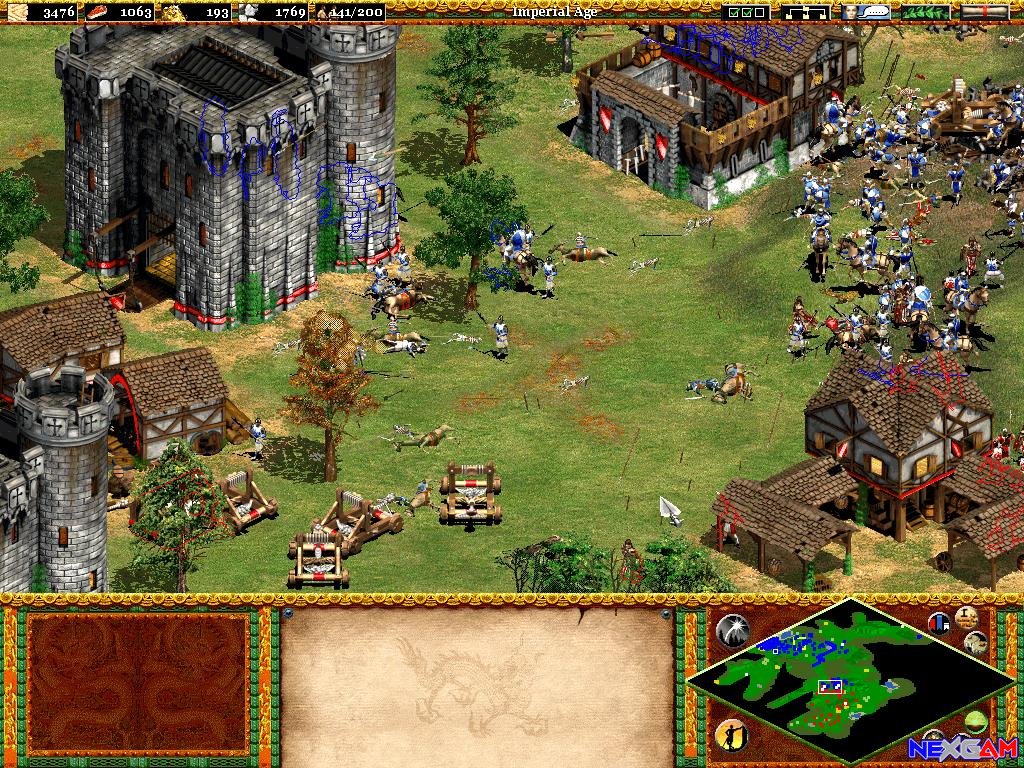
Age of Empires II : The pinnacle of PC gaming?

The unrestrained joy of seeing frankish knights and crossbowmen hurled to the ground by volleys of arrows is one which must affect all of humanity - at least i imagine, given my limited understanding of the world - yet few would admit to enjoying that to the level that i would. Perhaps some latent anger towards humanity or aesthetic attraction towards mass violence is hidden deep within my psyche. ( I feel this is cue for my joke: "I wanted to study Psychology at University, but i was a-freud!" Ba-doom-tish...and then when they think its over... "I tried to switch to philosophy but the administrator said 'I Kant!'")

It goes without saying that war, violence and mutilation are terrifically sad and tragic when they occur in reality, but there's clearly something appealing about it which leads to such high sales and popularity of games, film and literature on the subject. I am more guilty than most - I had a major breakdown at the end of last summer when i looked too long into a horse's face; became very upset at the plight of all the millions of beautiful and noble horses that had been slain in warfare in the past milennia, andthen went inside and probably, although i cant remember, played Age of Empires II to cheer myself up, contentedly slaughtering turkish cavalry.

Anyway, i love warfare; especially medieval warfare, and now i've got my excuses out of the way so nobody thinks i'm about to set up a band of mercenaries and take over Reading's town hall (double bluff?), i can get to my point.


The most playable strategy game of all time is 1999/2000 released Age of Empires II - Age of Kings/The Conquerors. Not its predecessor, Age of Empires, because everything feels like its moving ridiculously slowly, the priests make a sound so annoying you want to lead your empire towards aetheism, and elephants are just stupidly common (more elephants than people?). Equally, not its successor, Age of Empires three, because it forces you to actually give a fuck about america, and it complicates everything slightly too much, as if its trying to be Cossacks with an actual game engine as opposed to Russian mice prodding at things inside your PC.


No, he says, after a lengthy diversion that will be of no interest to someone who doesn't share my unhealthy obsessions, Age of Empires II is the one. To start with, I learnt most of my early history from the campaigns in this - so it provided me with a background knowledge of the hundred years war, the crusades, the formation of the Germanic Holy Roman Empire, The mongols, the huns, the aztecs... the list goes on. No need to bemoan the fact that they just MAKE STUFF UP like Valencia being rescued from the turks on El Cid's deathbed, or Harald Haadraada joining forces with William at the battle of Hastings in order to suit gameplay, that's just a minor niggle. I've been deeply, intermittently in love with this game for the last twelve years of my life, and it has been bought back into my life as stress relief for actually being an adult, which conversely has made me more of a child.


What makes this game so brilliant is absolute simplicity of commands. Even an idiot could work it; you left click to select someone, right click where you want them to go. The buttons are big, friendly,and all on screen; you dont have to remember any keys, and people generally do the right thing if you just leave them to it anyway. None of those "All of my men are trapped in an annoying bit of scenery in my assault on Jerusalem because of bad hexagons" bullshit you have to put up with when playing other games like the first AOE, Cossacks, or even the amazing Populous:the Beginning. There's plenty of opportunity to construct your empire just how you want it and at your own pace; you can fire up loads of troops and invade asia like some crazed napoleon, or you can cover your entire land in castles and then just leave it playing while you watch like a sadistic dictator while your enemies run out of resources, practically starve to death, and try to hack down your castles with their bare hands.


This isn't to say there aren't faults with it: you can generally only have 75 troops alive at any given time, which makes it hard to bring overwhelming force to bear on anyone; and the missions in the campaigns get a bit samey when you realise you have to BUILD A TOWN AND THEN KILL THEIR TOWN after some initial gimick like "Gather support among the population". (This results in you riding around rather nervously, trying to find people who like you, and its all very exciting, and then you find some people but .... THEY WANT YOU TO BUILD THEIR TOWN. And then you think, didn't i just do this in the last mission?)


However, it is a game that's endlessly adaptable. The different cultures are radically different each with their own subtly varied set of technologies and units, and i personally get a kick out of thinking of myself as a spaniard while playing as the Spanish etc., resulting in me shouting "Cono" and "Hijo de Puta" at aztec armies.
So in essence, this game is perfect for anyone whose own existance feels so minor and insignificant they harbour secret dreams of making the world pay by building castles all over it. It may not have the graphical and gameplay sophistication of Medieval: Total War and its ilk, and as a result, is slightly less exciting, but its just so well made that any scenario in it can occur, and on harder levels it really is a fight for survival. It's just tense, a lot of the time. Maybe i care too much about it. But then if i don't care about the death of frankish knights, what can i care about?

(Rhetorical question)